


Trainings

See

About training

See

Training schedule

See

Training Packages

Contact Form

* required fields

The administrator of personal data is J.S. Hamilton Poland Sp. z o.o. with headquarters in Gdynia, ul. Chwaszczyńska 180, 81-571 Gdynia. We have appointed a Data Protection Officer who can be contacted by letter or by e-mail: iodo@jsh.com.pl

News

Microbiome, Cosmetic Efficacy and Safety – How to Build Credible Claims? 
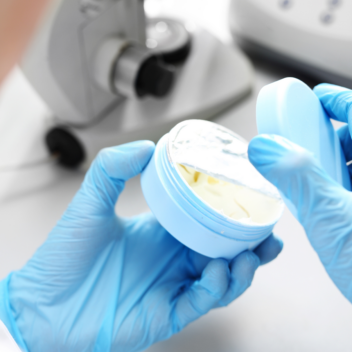
The development of cosmetic products increasingly involves the need to substantiate their performance with objective data and appropriately designed studies. This applies both to products based on the concept of the skin microbiome and to cosmetics whose efficacy is assessed using standardized scales or instrumental measurements. Product safety remains an equally important aspect, requiring a …
See more

Irradiation Analysis in Dietary Supplements – Why Is It Critical for Manufacturers and Distributors?

Dietary supplements frequently rely on natural components, such as dried herbs, powdered plant materials, and standardized botanical extracts. Due to their natural origin, these raw materials exhibit an increased susceptibility to microbiological contamination occurring during harvesting, drying, processing, or storage. Food irradiation (radiation decontamination) is a physical technology applied across the industry to effectively reduce …

See more

Ingredient Identity in Dietary Supplements – Why Quantitative Analysis Alone May Not Be Enough

On the dietary supplement market, products containing the same declared ingredient may appear very similar – with comparable compositions, identical dosages and similar claimed properties. However, this does not mean that the raw materials used are identical in terms of quality, origin, purity or authenticity. For this reason, quality control of dietary supplements should not …

See more

How to Confirm the Efficacy and Safety of a Cosmetic Product? Key Areas of Testing

Reliable confirmation of a cosmetic product’s efficacy and safety requires a properly designed testing programme. Changing environmental conditions, new product development projects and the need to substantiate product claims with reliable evidence make appropriate test planning particularly important. In this article, we take a closer look at winter skincare efficacy testing, the importance of selecting …

See more

MOAH and MOSH in dietary supplements – sources of contamination and the importance of laboratory testing

Increasing requirements regarding the quality and safety of dietary supplements mean that manufacturers are paying more and more attention to contaminants that can enter the product at various stages of its development. One group of substances requiring control is mineral oil hydrocarbons (MOH), which include the MOSH and MOAH fractions. Their presence may be related …

See more

Certification, New Regulations and Specialist Cosmetic Testing – Key Information for the Cosmetics Industry 

Safety and credibility of cosmetic products increasingly require not only compliance with regulatory requirements, but also objective evidence confirming their quality and claimed performance. Properly designed testing can support both product safety assessment and marketing communication. In this latest edition, we take a closer look at the “Dermatologically Tested” voluntary certification programme, proposed changes to …

See more

Unified Vitamin and Mineral Limits in the European Union – What Do They Mean for Dietary Supplement Manufacturers?

The European dietary supplements market is facing one of its most significant regulatory changes since the adoption of Directive 2002/46/EC. The European Commission is currently working on unified Maximum Permitted Levels (MPLs) for vitamins and minerals in both dietary supplements and fortified foods. The new legislation aims to improve consumer safety, harmonize regulations across Member …

See more

Cosmetic Efficacy and Safety Evaluation: Clinical Studies and Instrumental Testing for Cosmetics

“Reduces redness,” “evens out skin tone,” “brightens discolorations” – such claims are frequently found on cosmetic products today. For consumers, they serve as a guide during product selection, whereas for cosmetic manufacturers, they represent firm marketing claims that must be supported by reliable scientific evidence. The modern beauty market no longer relies solely on catchy slogans; objective evaluation of cosmetic efficacy that …

See more

Summer in the Cosmetic Laboratory – Testing Cosmetic Performance in Summer Conditions and Regulatory Updates for the Industry

Summer is a particularly demanding season for cosmetic products. High temperatures, intense UV exposure, seawater and chlorinated water can all affect product performance and durability. At the same time, manufacturers must keep pace with evolving regulations governing ingredient safety and market compliance. In this article, we present the latest regulatory developments and laboratory testing methods …

See more